Vanilla Supply Planning for Ingredient Distributors
How ingredient distributors, bakeries and flavour houses can plan vanilla supply more reliably: forecasting demand, selecting grades, managing stock and working with Indonesian trading partners.
Vanilla is one of the most volatile ingredients a distributor can carry. Prices move, harvest quality varies season to season, and end customers expect consistent sensory results regardless of what the curing year looked like in Indonesia or elsewhere. For importers and wholesalers, that combination makes supply planning a core commercial skill, not an afterthought.
This article walks through the practical building blocks of a vanilla supply plan: understanding the formats you can stock, forecasting demand, setting safety stock, choosing Incoterms, and building a sourcing relationship that survives market cycles. It is written for buyers who want to serve bakeries, gelato makers, flavour manufacturers and food processors reliably.
Start With the Formats You Actually Need
Vanilla is not one SKU. Before planning volumes, map your customer base to the formats they actually use. Each format has different lead times, shelf life considerations and minimum useful order sizes.
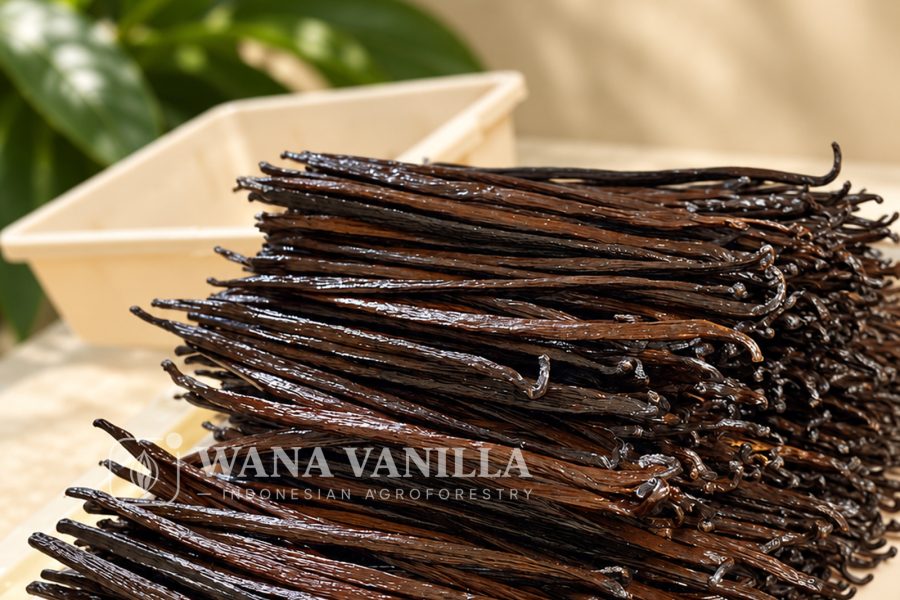
- Gourmet whole beans (Planifolia): the workhorse of patisserie, gelato and premium dairy. Typical specs include moisture 25-35% and vanillin from 1.5%. Length grading matters commercially: A+ beans (18 cm and longer) carry a visual premium, while Grade A (14-17.9 cm) suits most professional kitchens.
- Gourmet Tahitensis whole beans: prized for floral, anise-cherry notes in pastry and perfumery-adjacent applications. Volumes are smaller globally, so plan for tighter availability and longer lead times.
- Extraction grade beans: drier, often shorter or split beans used by extract houses and flavour manufacturers. Specifications vary by lot, so always request the specific COA for the batch offered rather than assuming a fixed moisture or vanillin figure.
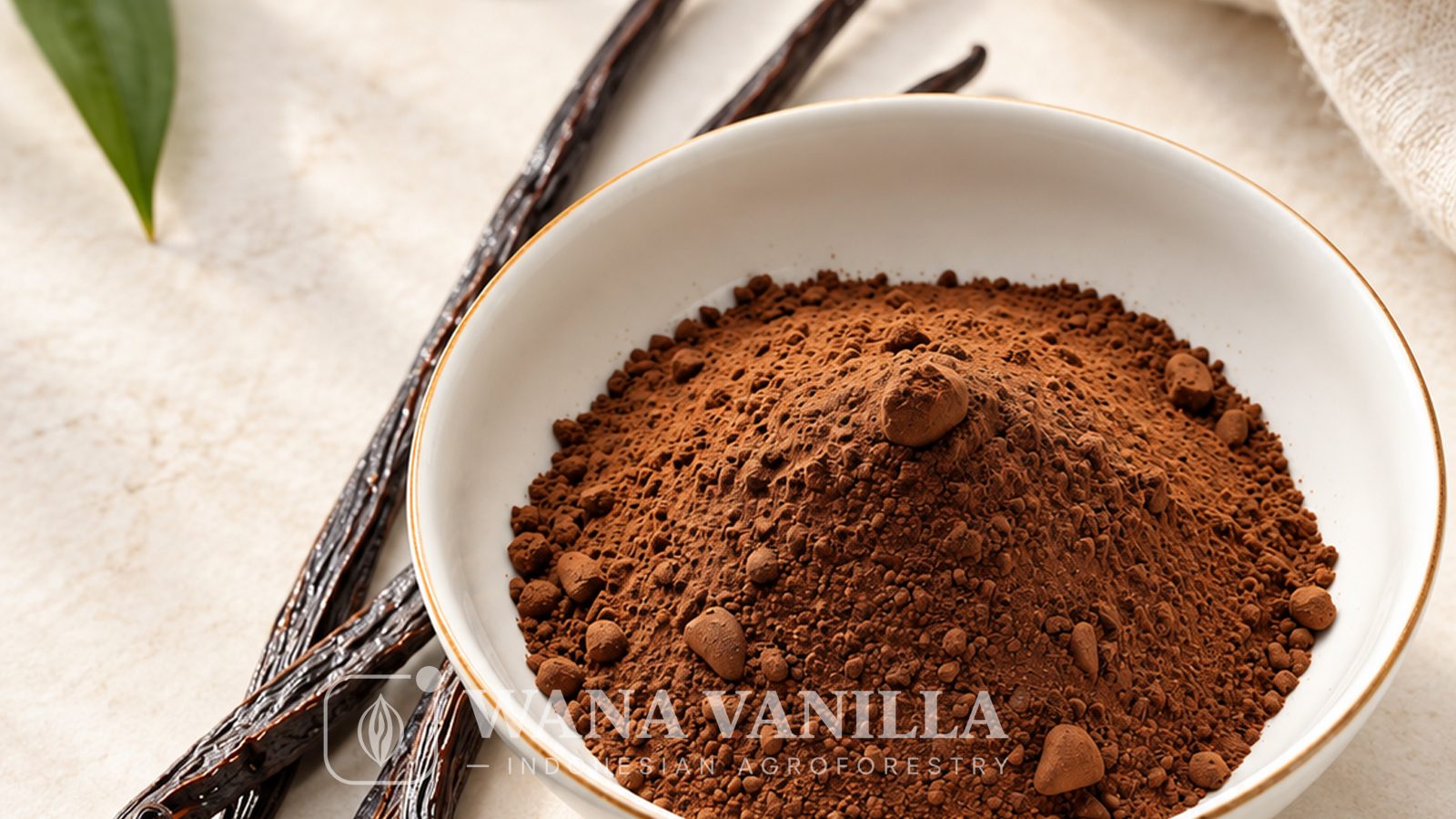
- Pure ground vanilla powder: useful for dry mixes, bakery premixes and visible-speck applications. A sample COA may show moisture around 10.89%, but each production run should be verified individually.
- Natural vanilla concentrate: an alcohol-free liquid option (for example, a 70% natural concentrate at pH 4.5-5.0 and density around 1.08 kg/L) that suits dairy, beverages and halal-sensitive formulations where ethanol extracts are not preferred.
Forecasting Demand Without Guesswork
Most distributors underestimate how lumpy vanilla demand is. Flavour houses order in campaigns, gelato producers peak in spring and summer, and bakery chains re-launch SKUs seasonally. A workable forecast separates baseline from campaign demand.
- Pull 12-24 months of sell-out data per format and per grade.
- Mark one-off promotional spikes so they do not inflate the baseline.
- Overlay confirmed customer forecasts, even informal ones, as a separate layer.
- Build three scenarios (conservative, expected, stretch) and size inbound orders against the expected scenario.
If you are new to a category, start conservatively. Trial orders from 1 kg on whole beans and powder let you validate customer response before committing to full container economics.
Safety Stock, Lead Time and Supplier Capacity
Vanilla lead times are driven by two factors: origin production capacity and transit mode. For reference, a single Indonesian trading partner may offer monthly capacities such as 3,000 kg of Planifolia gourmet, 100 kg of Tahitensis gourmet, 5,000 kg of extraction grade, 1,000 kg of ground powder and 2,000 L of concentrate. Those numbers are useful constraints when sizing orders.
Practical rules of thumb:
- Hold at least one full replenishment cycle of safety stock on your top-moving SKUs.
- For Tahitensis and other low-capacity items, pre-book quarterly rather than reacting to orders.
- Air freight is common for vanilla due to value density; plan cash flow around faster but more expensive shipments.
- Keep separate buffers for gourmet and extraction grades; they are not substitutable from a customer standpoint.
Choosing Incoterms That Match Your Operation
Incoterms shape who handles risk, paperwork and cost. For vanilla from Indonesia, three options are common:
- EXW: you take control at the supplier’s premises. Maximum flexibility if you have a trusted freight forwarder in Indonesia, but you own every step after pickup.
- FCA: the supplier delivers to a named carrier or airport, typically simpler for export clearance while leaving the main freight leg to you.
- DAP: the supplier arranges delivery to your named place. Easier for buyers without import logistics infrastructure, though you still handle import duties and clearance.
Smaller distributors and first-time buyers usually benefit from DAP on initial shipments, then migrate to FCA or EXW as volumes grow and in-house logistics mature.
Quality Verification and Documentation
Supply planning fails when inbound goods do not match expectations. Build a receiving protocol that avoids surprises:
- Request a batch-specific COA for every shipment, covering moisture and vanillin at minimum.
- Agree sampling procedures in writing before the first order.
- Inspect for mould, mites and foreign matter on arrival; vanilla is sensitive to humidity in transit.
- Do not assume certifications you have not seen. If a buyer requires organic, HACCP, ISO or similar, ask the supplier to confirm scope and provide the certificate; never rely on verbal claims.
- Keep retention samples from every lot for at least the shelf life of the product.
Building a Resilient Sourcing Relationship
Vanilla markets move in multi-year cycles. The distributors who weather these cycles best are usually the ones with transparent, long-term supplier relationships rather than purely transactional ones.
- Share your rolling forecast with your origin partner so they can allocate capacity.
- Discuss grade substitutions early (for example, blending A+ and A beans for a bakery that does not need maximum length).
- Agree on how price adjustments will be handled when the market moves sharply in either direction.
- Diversify formats before diversifying suppliers; adding powder or concentrate to a bean programme often adds more resilience than adding a second origin.
A Short Note on Working With PT Wana Vanilla Indonesia
PT Wana Vanilla Indonesia is an Indonesian vanilla trading company offering gourmet Planifolia and Tahitensis beans, extraction grade beans, pure ground vanilla powder and a natural, alcohol-free vanilla concentrate. Trial quantities start from 1 kg for whole beans and powder, and shipments are typically arranged by air under EXW, FCA or DAP terms depending on buyer preference.
If you are mapping out your next vanilla supply cycle and would like to discuss specifications, capacities or sample availability, you can reach the team via wanavanillaindonesia.com. Whether or not it leads to an order, a clear supplier conversation is one of the most useful inputs any distributor can add to their plan.