B2B Vanilla Sourcing: Writing a Useful Purchase Spec
A clear purchase specification is the single most useful document in B2B vanilla sourcing. Here is how to write one that protects both buyer and supplier.
In the vanilla trade, most quality disputes do not start in the warehouse. They start on paper, when the buyer and the supplier have slightly different ideas about what was actually ordered. One side expected 16 cm Grade A Planifolia at 30% moisture; the other shipped shorter beans at 22% because that is what their local market calls Grade A.
A written purchase specification closes that gap. It turns vague commercial language into something a QC lab can verify on arrival. This guide explains, from a trading-company perspective, what a useful B2B vanilla specification should contain and why each field matters.
Why a Written Specification Matters
Vanilla is a natural product with wide batch-to-batch variation. Length, moisture, vanillin content, colour, aroma profile and defect levels all drift between harvests, regions and curing houses. Without a written specification you are relying on trust and memory, which rarely survives a container that spent six weeks in transit.
A good specification does three things:
- It tells the supplier exactly which product to pick, pack and ship.
- It gives your incoming QC a clear pass or fail checklist.
- It defines what counts as a legitimate claim if something is off-spec.
Core Fields Every Vanilla Spec Should Contain
Whether you are buying 1 kg for R&D or planning monthly containers, the structure of the specification is the same. Only the tolerances change.
1. Botanical Identity and Origin
State the species clearly: Vanilla planifolia or Vanilla tahitensis, and the country of origin (for example, Indonesia). If you can accept a planifolia/tahitensis mix for extraction, say so, and specify an approximate ratio or simply note that any ratio is acceptable.
2. Product Form and Grade
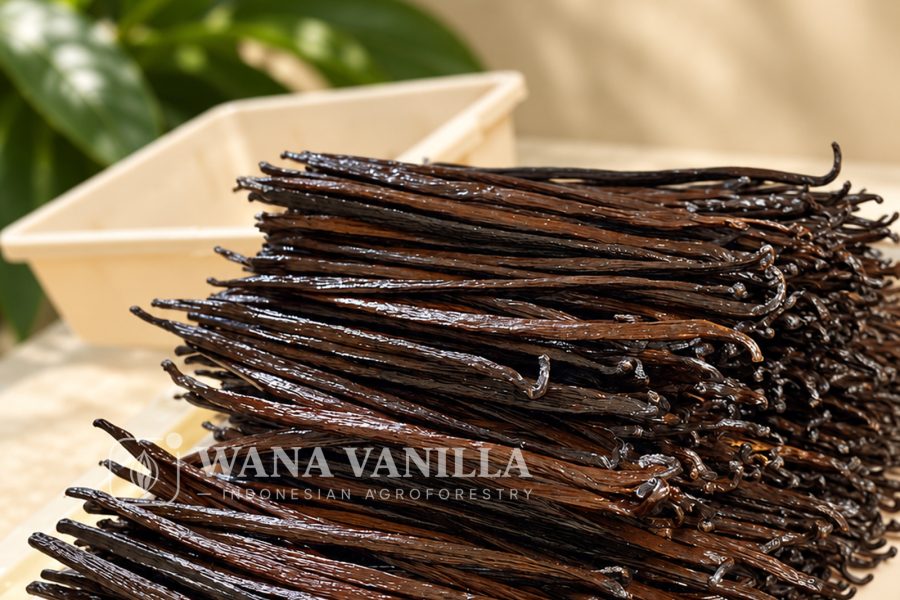
Define the physical form: whole beans, cuts, powder or liquid concentrate. For whole beans, state the grade category you want. A workable framework used by many Indonesian suppliers, including PT Wana Vanilla Indonesia, is:
- Grade A+ gourmet: 18 cm or longer
- Grade A gourmet: 14 to 17.9 cm
- Extraction grade: shorter, split or lower cosmetic quality
Do not assume these length bands are universal; always write them into the document.
3. Moisture Content
Moisture drives both aroma and shelf life. Gourmet beans are typically offered in a 25 to 35% moisture band, which keeps them pliable for split-and-scrape use in bakery, patisserie and gelato. Extraction beans are usually drier, but the exact figure varies by lot, so specify your acceptable range rather than demanding a single number. Also state the test method you will use (for example, oven loss on drying) so results are comparable.
4. Vanillin Content
For whole beans, a minimum of 1.5% vanillin on dry basis is a reasonable gourmet benchmark and is what trading houses such as WVI typically indicate for their gourmet lots. For extraction beans, state your minimum and the method (HPLC is the industry reference). Avoid writing an unrealistic figure just to look demanding; it only guarantees rejections.
5. Sensory and Visual Criteria
Add short, verifiable descriptions:
- Colour: dark brown to black, uniform
- Appearance: whole, pliable, no major splits for gourmet; splits acceptable for extraction
- Aroma: characteristic vanilla, no mustiness, no smoke, no fermentation off-notes
- Defects: free from visible mould, insect damage and foreign matter
Specifying Powder and Concentrate
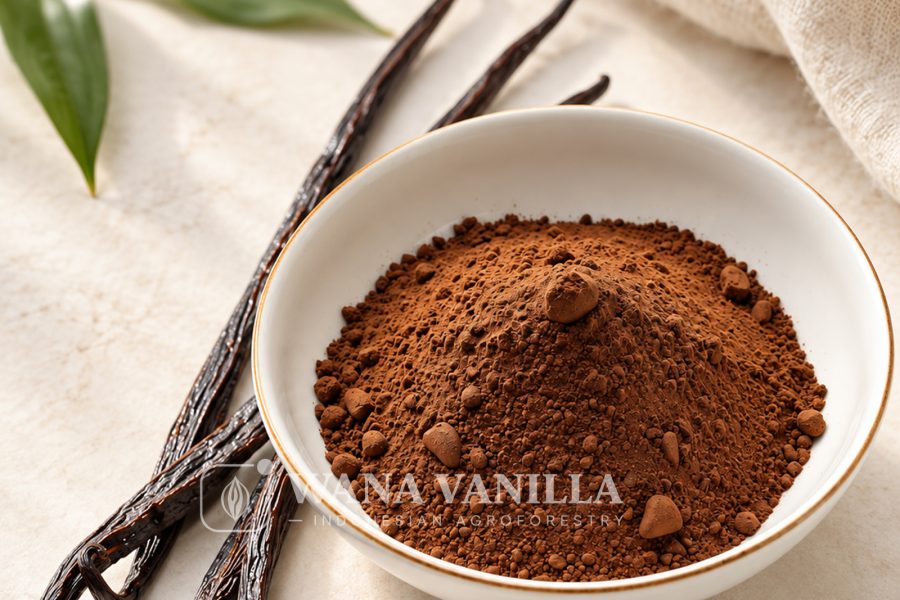
Pure ground vanilla powder and liquid concentrates need their own fields. For ground vanilla powder, request:
- 100% vanilla beans, no carriers, no sugar, no maltodextrin unless agreed
- Particle size or mesh target
- Moisture range (as a reference, one WVI sample COA measured 10.89%; individual batches will vary, so always ask for the batch COA)
- Packaging in food-grade, moisture-barrier material
For a natural vanilla concentrate, define:
- Alcohol status (for example, alcohol-free)
- Concentration (such as 70% natural concentrate)
- pH range (for instance, 4.5 to 5.0)
- Density (for example, around 1.08 kg/L)
- Allergen, additive and preservative declaration
These are the parameters WVI typically works with on its concentrate; your own formulation team may want to tighten them further.
Commercial and Logistics Clauses
The quality section is only half the document. The commercial half is where most money is lost or saved.
- Quantity and tolerance: state order size and acceptable weight tolerance (for example, plus or minus 2%).
- Incoterms: be explicit. Common options with Indonesian trading suppliers include EXW, FCA and DAP. Each shifts cost and risk differently.
- Mode of transport: small vanilla shipments are usually sent by air; specify this if timing matters.
- Packaging: vacuum bags inside cartons for beans; sealed food-grade containers for powder and liquid.
- Labelling: product name, species, grade, batch number, harvest or production date, net weight, country of origin.
- Documents required: commercial invoice, packing list, certificate of origin, phytosanitary certificate where required, and a batch-specific COA.
- Payment terms and currency.
Sampling, Testing and Claims
Define how you will verify the shipment:
- Pre-shipment sample size (trial orders from 1 kg are often enough to validate aroma and visual quality before committing to larger volumes).
- Which parameters you will test on arrival and in which lab.
- Time window for raising a claim after delivery.
- Agreed procedure for retained samples and dispute resolution.
Having these points agreed in writing, before the first shipment, is far easier than negotiating them under pressure after a container arrives.
A Realistic Note on Certification
Do not copy certification requirements from a template without checking what your supplier actually holds. A trading company is not the same as a farm or a factory; some certifications belong to the grower, curer or packing facility rather than to the exporter. If organic, HACCP, ISO or similar status matters for your market, ask specifically which entity in the chain holds which certificate, and request the current document. Writing “must be certified organic” into a spec without confirmation only creates problems later.
Working With Your Supplier on the Spec
A good specification is a conversation, not a one-way demand. Send a draft, ask the supplier what is realistic for the current crop, and adjust tolerances where the natural variation of vanilla makes a tight number meaningless. Suppliers who push back on unrealistic figures are usually the ones who will also tell you honestly when a lot is not right for you.
If you would like to discuss specifications for Indonesian Planifolia, Tahitensis, extraction beans, powder or concentrate, you can reach PT Wana Vanilla Indonesia through wanavanillaindonesia.com. Trial quantities from 1 kg are available for whole beans and powder, which is a practical way to validate a draft specification before scaling up.