Planifolia, Tahitensis or Mixed Extraction Beans: How to Choose
Compare Vanilla Planifolia, Tahitensis and mixed extraction grade beans by aroma profile, typical use case and sourcing logic for extracts, bakery and gelato manufacturing.
Buyers sourcing vanilla beans for industrial or artisan use frequently face the same question: should the next container, carton or trial shipment be Planifolia, Tahitensis, or a mixed extraction lot? The answer rarely comes down to one variable. Aroma profile, downstream application, extraction method, cost per kilo of usable flavour and supply continuity all weigh in.
This guide outlines how importers, distributors, bakeries, gelato producers and flavour houses can approach that decision. It is written from the perspective of a trading company that handles all three categories, and the goal is to help you make a sound technical choice regardless of where you eventually buy.
Understanding the Two Botanical Varieties
Two cultivated species dominate international vanilla trade. Both are grown successfully in Indonesia, and both are offered as whole gourmet beans and as extraction grade material.
Vanilla Planifolia
Planifolia is the classical “Bourbon-style” vanilla, the reference profile most consumers associate with the word vanilla. It typically delivers a vanillin-forward aroma with warm, sweet, slightly woody and creamy notes. Because its vanillin content is comparatively high, it performs reliably in heat-based applications and in alcohol extractions where a clean, recognisable vanilla signature is required.
Vanilla Tahitensis
Tahitensis is a different species, with a lower vanillin fraction but a broader bouquet of secondary aromatic compounds. Tasting notes typically include floral, anisic, cherry, prune and almond-like nuances. It is prized by patissiers, premium ice-cream producers, perfumers and chocolatiers who want complexity rather than a straight vanillin punch. On a pure vanillin basis it looks weaker, but on a sensory basis it brings dimensions Planifolia alone cannot provide.
Gourmet vs Extraction Grade: Why the Distinction Matters
Both varieties are sold in two commercial categories, and confusing them is a common source of sourcing errors.
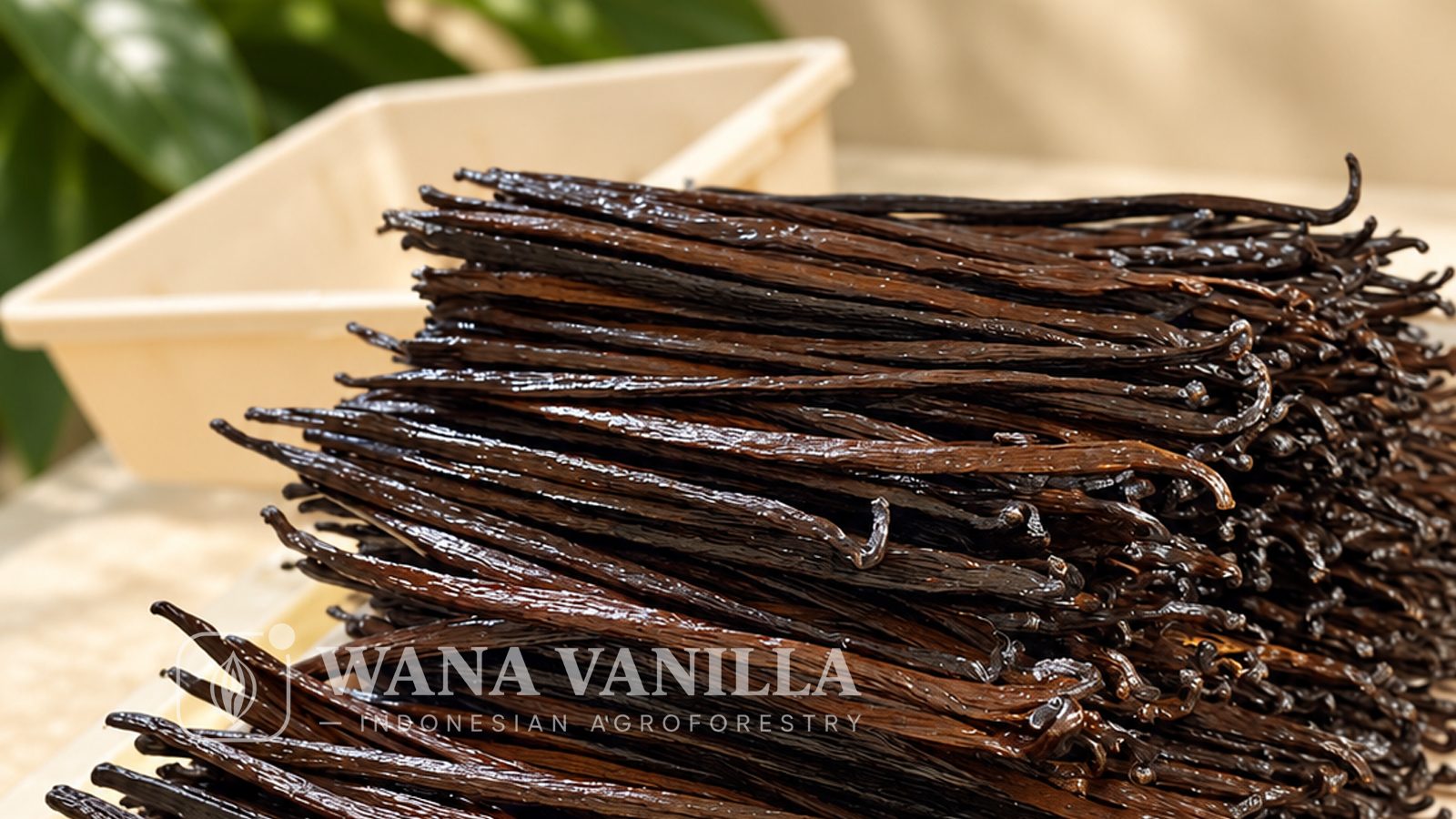
- Gourmet whole beans are selected for appearance, pliability and moisture, typically 25-35%. They are intended for visible use: bean splitting, seed scraping, infusion of creams and syrups, and premium retail packaging. Length grades matter: A+ is 18 cm or longer, A is 14-17.9 cm.
- Extraction grade beans are optimised for downstream processing, not for display. They may be shorter, drier, split or cosmetically imperfect, but they still carry the aromatic compounds needed for extracts, oleoresins, concentrates, powders and compound flavours. Specifications vary batch by batch rather than following one uniform figure.
If you are producing a bottled extract, a vanilla paste, a flavour concentrate or a bakery compound, extraction grade is almost always the economically rational choice. Paying gourmet prices to grind beans into alcohol wastes the visual quality you are buying.
When to Choose Planifolia Extraction Beans
Planifolia extraction lots are the workhorse of the industry. They suit buyers who need:
- A classic, vanillin-dominant extract for mainstream bakery, dairy and confectionery lines.
- Predictable sensory results across repeat batches of a standard product.
- Larger run sizes where consistent, familiar vanilla character is a brand expectation.
- Downstream processes involving heat, where secondary aromatics may partly evaporate and a strong vanillin backbone is still desired.
Supply for extraction grade material is generally more available than for gourmet, which helps production planning.
When to Choose Tahitensis Extraction Beans
Tahitensis is a specialty choice. It makes commercial sense when:
- You are formulating premium ice-cream, pastry glazes, pralines or chocolate ganaches where floral and fruity notes command a price premium.
- You are building a flavour library and need a counterpoint to Bourbon-style profiles.
- Your end customer is a chef, patissier or perfumer who recognises and asks for the Tahitensis character.
- You want to differentiate a finished extract or paste as a distinct SKU rather than compete on commodity vanilla pricing.
Because global and Indonesian Tahitensis production is far smaller than Planifolia, allocations are tighter. Trading capacity for Tahitensis whole beans is often measured in tens or low hundreds of kilos per month rather than tonnes, so forecasting is important.
When a Mixed Extraction Lot Is the Right Answer
Mixed extraction beans combine Planifolia and Tahitensis in a single lot. The exact ratio depends on availability and buyer agreement. This option is attractive in several practical scenarios:
- Flavour complexity at an accessible cost: a predominantly Planifolia base lifted with a Tahitensis fraction can deliver a more rounded extract than Planifolia alone, without paying full Tahitensis prices.
- Custom house profiles: flavour manufacturers developing proprietary vanilla bases often prefer a mix to create a signature profile not easily copied.
- Supply resilience: when one variety is temporarily short, a mixed specification keeps production running.
- Trial and R&D work: smaller producers testing new SKUs can explore blended profiles before committing to single-variety stock.
A mixed lot is not a lower grade. It is a different specification. Agree the approximate ratio, the acceptable moisture range and the intended extraction method with your supplier before confirming the order.
Practical Sourcing Checklist
Regardless of which category you select, run each enquiry through the same basic filters:
- Define the end product first: extract, paste, powder, concentrate, ice-cream base, bakery inclusion.
- Decide the sensory target: classic vanillin, floral-complex, or custom blend.
- Request a current batch description, including moisture range and visual condition, rather than assuming one fixed figure applies to every shipment.
- Order a trial quantity before scaling. For whole beans and powder, trial orders can start from 1 kg.
- Clarify Incoterms early. EXW, FCA and DAP each shift responsibility and cost differently, and international vanilla shipments are usually moved by air.
- Match monthly draw to realistic supply capacity. Planifolia extraction capacity is in the thousands of kilos per month range; Tahitensis gourmet is far more limited.
A Short Note on Related Formats
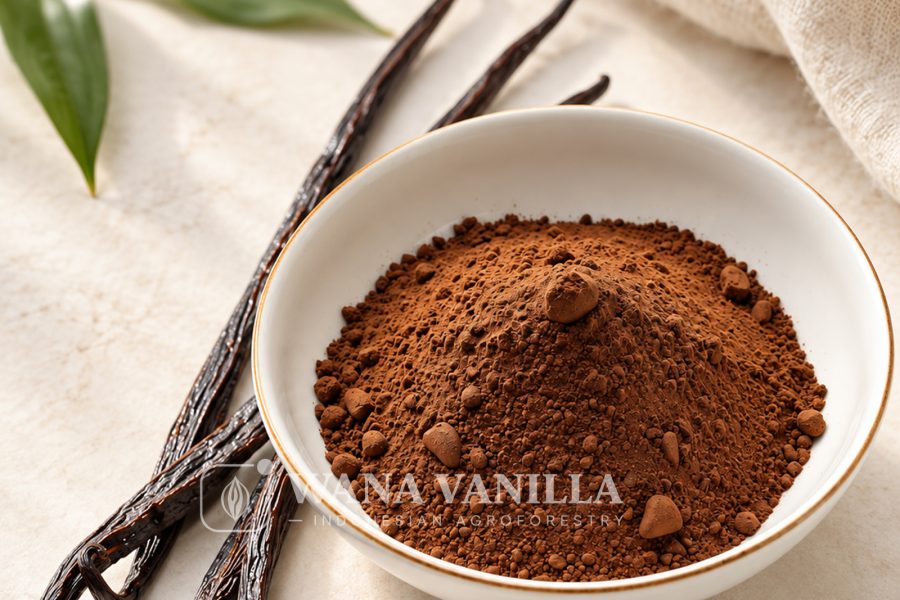
If whole beans are not the most efficient input for your process, consider adjacent formats. Pure ground vanilla powder suits dry blends and premixes; a sample COA on one lot indicated moisture around 10.89%, though individual batches naturally vary. A natural vanilla concentrate, alcohol-free, with pH 4.5-5.0 and density around 1.08 kg/L, can replace in-house extraction entirely for buyers who prefer a ready liquid input.
Talking to a Trading Partner
Choosing between Planifolia, Tahitensis and mixed extraction beans is ultimately a conversation about your recipe, your volumes and your tolerance for batch variation. A trading company that handles all three can usually propose the most economical fit once those details are shared.
If you would like to discuss specifications, request a trial lot or review current availability, you can reach PT Wana Vanilla Indonesia through wanavanillaindonesia.com. Share your target application and monthly volume, and a tailored recommendation can follow.