Vanilla Planifolia vs Tahitensis: Choosing for Commercial Food Use
A practical comparison of Vanilla planifolia and Tahitensis for commercial food applications, covering flavour profile, supply stability, cost considerations, and product-specific selection guidance.
When sourcing vanilla for commercial food production, the choice between Vanilla planifolia and Vanilla tahitensis is rarely about which is “better” and almost always about which is better suited to a specific product, process, and budget. Both species are traded internationally as gourmet whole beans, extraction-grade material, and processed derivatives, but they behave differently in formulations.
This article outlines the practical differences that matter to importers, flavour houses, bakeries, and gelato manufacturers. It is based on standard industry knowledge and the product specifications offered by PT Wana Vanilla Indonesia, an Indonesian vanilla trading company.
Botanical and Sensory Differences
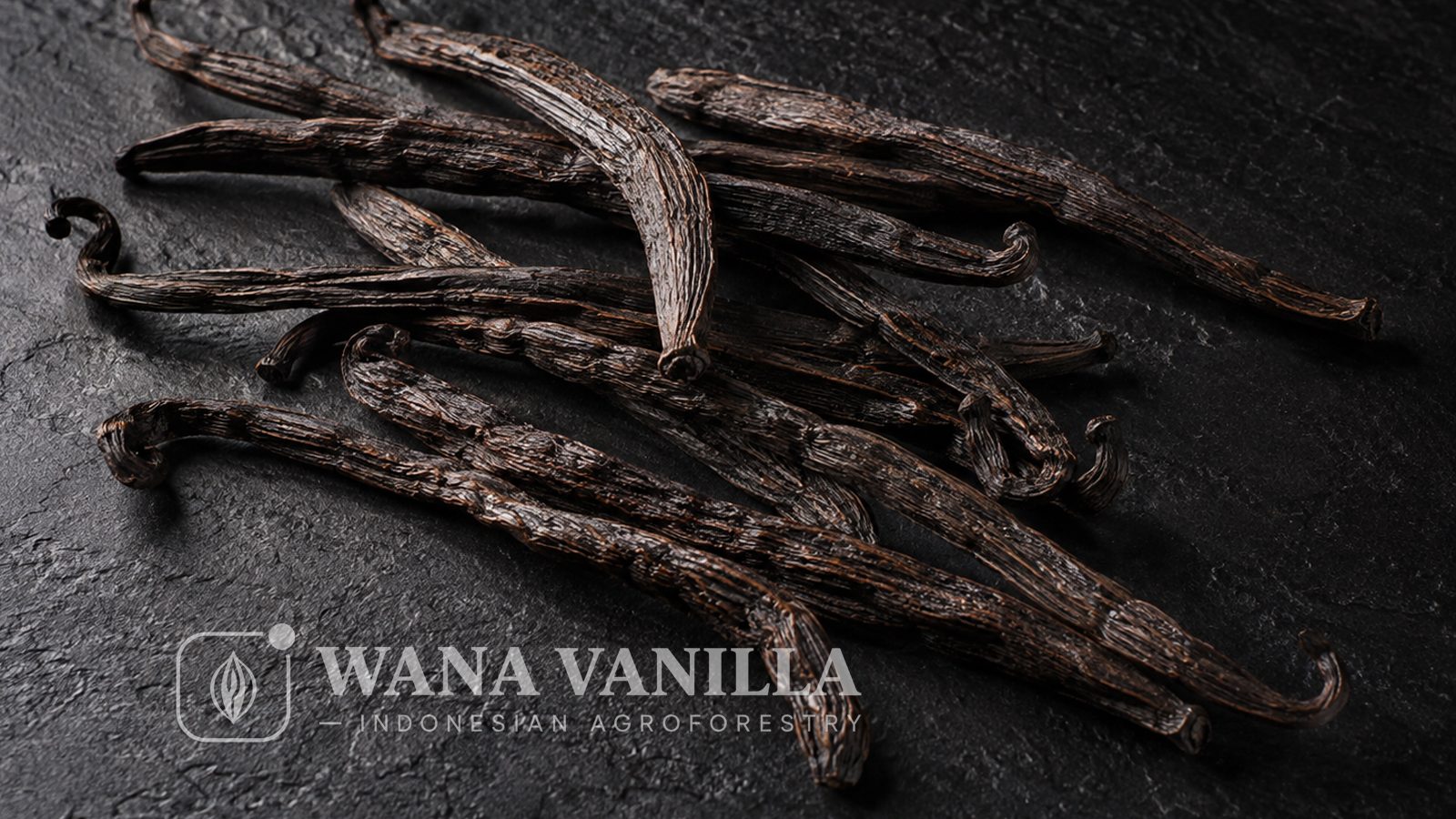
Vanilla planifolia, often called Bourbon vanilla when grown in the Indian Ocean region, is the dominant commercial species. Indonesian planifolia beans are typically long, dark, oily, and rich in vanillin. The flavour profile is broad and familiar: sweet, creamy, with notes of dried fruit, tobacco, and sometimes a subtle smokiness depending on curing.
Vanilla tahitensis is a distinct species with a narrower natural distribution and much smaller global production. Its beans are generally plumper, lighter in colour, and contain less natural vanillin. Instead, tahitensis carries high levels of anisyl compounds, which produce a distinctly floral, fruity, and sometimes cherry- or licorice-like aroma. This makes it immediately recognisable and less interchangeable with planifolia than many buyers assume.
Flavour Performance in Different Applications
The sensory differences translate directly into formulation behaviour. Selecting the wrong species can flatten a product’s intended profile or introduce unexpected aromatic notes.
- Bakery and pastry: Planifolia is the safer default. Its high vanillin content survives oven heat well and delivers the classic vanilla note consumers expect in cakes, cookies, and laminated doughs. Tahitensis can work in delicate creams and fillings but may lose its floral top notes during prolonged baking.
- Gelato and ice cream: Both species perform well, but for different reasons. Planifolia gives a deep, rounded vanilla base that pairs with chocolate, caramel, and nuts. Tahitensis shines in fruit-based gelato, white chocolate, and floral or exotic flavour concepts where its anisic character adds complexity.
- Dairy and desserts: Tahitensis is often preferred in panna cotta, crème brûlée, and premium yoghurt where its aromatic lift is perceptible without heavy vanillin. Planifolia remains the standard for custards and traditional vanilla desserts.
- Flavour manufacturing and extraction: Planifolia is the workhorse for vanillin-focused extracts and natural flavour bases. Tahitensis is typically used in smaller quantities as a top-note modifier or in premium blends where its distinctive profile justifies the higher cost.
- Beverages: Alcohol-based extracts and concentrates made from planifolia provide a stable, recognisable vanilla note. Tahitensis can be valuable in clear spirits, liqueurs, and ready-to-drink products where its floral character remains detectable.
Supply, Availability, and Cost Considerations
Commercial buyers must weigh flavour against supply reliability. Planifolia dominates global production, and Indonesia is one of the largest origins. A trading company such as PT Wana Vanilla Indonesia can offer planifolia whole beans at a supply capacity of 3,000 kg per month, which supports consistent industrial purchasing.
Tahitensis is a niche product. The same supplier lists tahitensis whole beans at a capacity of only 100 kg per month. This reflects the reality of the species: limited cultivation, smaller harvests, and higher prices. For a manufacturer planning a product line around tahitensis, securing supply continuity requires advance planning and possibly multi-supplier strategies.
Cost is not a fixed figure, but tahitensis generally trades at a premium to planifolia at equivalent grade and moisture. Buyers should evaluate cost per kilogram of usable flavour, not just per kilogram of beans. A lower-vanillin tahitensis bean may require a higher inclusion rate to achieve a target flavour intensity in some applications.
Physical Specifications and Grading
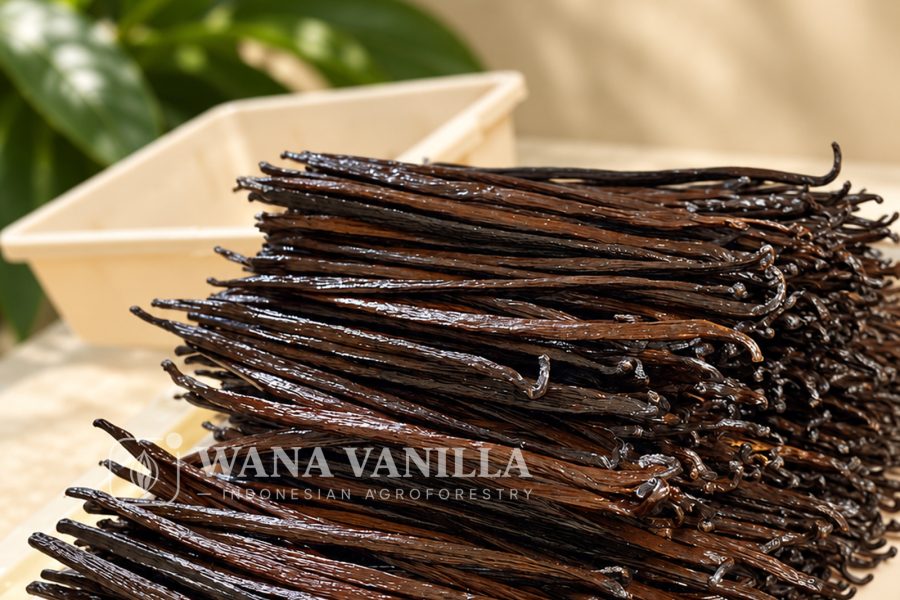
Both species are commonly traded in gourmet grades based on length and moisture. PT Wana Vanilla Indonesia offers Grade A+ beans at 18 cm or longer and Grade A at 14 to 17.9 cm for both planifolia and tahitensis, with moisture between 25% and 35% and minimum vanillin content of 1.5%.
For extraction purposes, the supplier offers extraction-grade beans in planifolia, tahitensis, or a mix, with a supply capacity of 5,000 kg per month. Extraction-grade material is typically shorter, split, or cosmetically imperfect but still suitable for solvent or aqueous extraction. Buyers should request a certificate of analysis for each batch rather than assuming uniform specifications.
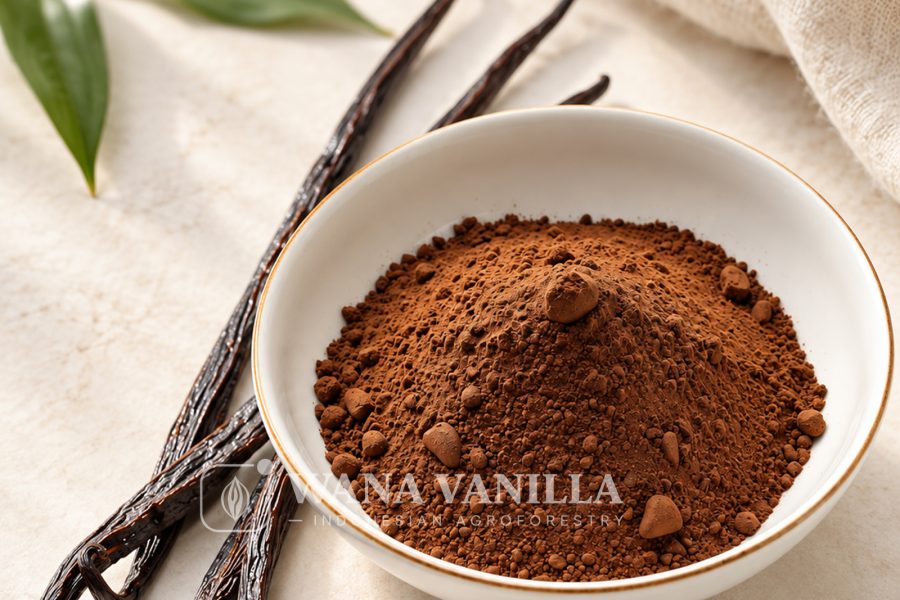
Processed derivatives include pure ground vanilla powder and a natural vanilla concentrate. The powder is offered with a sample COA showing 10.89% moisture, but this is a measured value from one sample and should not be assumed identical across batches. The concentrate is alcohol-free, 70% natural concentrate, with pH 4.5 to 5.0 and density 1.08 kg/L, supplied at up to 2,000 litres per month.
Practical Selection Criteria for Buyers
When deciding between planifolia and tahitensis for a commercial application, consider the following sequence:
- Define the target flavour profile. Is the goal a classic, vanillin-forward note or a floral, fruity accent?
- Assess heat and process exposure. Will the vanilla survive baking, pasteurisation, or long storage?
- Estimate required volumes. Can the supply chain support tahitensis at your projected scale?
- Calculate cost per finished unit. Factor in inclusion rate, not just raw material price.
- Request samples and run bench tests. Sensory evaluation in the actual product matrix is essential.
- Confirm documentation. Ask for COAs, country of origin, and any available quality data for each lot.
Sourcing Whole Beans and Derivatives
PT Wana Vanilla Indonesia supplies both species as whole beans, extraction-grade material, powder, and concentrate. Trial orders start from 1 kg for whole beans and powder, which allows manufacturers to evaluate quality before committing to larger volumes. Delivery is generally arranged by air, with Incoterms EXW, FCA, and DAP available.
For importers and food manufacturers evaluating Indonesian vanilla, requesting samples of both species side by side is a practical first step. Testing them in your own formulation will reveal more than any specification sheet can.
To discuss specifications, request samples, or confirm current availability, contact PT Wana Vanilla Indonesia.