Vanilla Bean Moisture and Post-Harvest Conditioning: A Buyer’s Guide
Moisture content and post-harvest conditioning determine how vanilla beans perform in extraction, baking and retail. This guide explains what importers and manufacturers should check before buying.
Vanilla bean moisture is one of the most misunderstood quality parameters in the B2B vanilla trade. Buyers often focus on length, grade and vanillin content, but moisture and post-harvest conditioning directly affect shelf life, microbial stability, extractable flavour and processing yield.
For importers, flavour manufacturers, bakeries and gelato producers, understanding how vanilla beans are cured and conditioned helps prevent costly surprises: mouldy shipments, brittle beans, low extraction efficiency or inconsistent flavour in finished products.
Why Moisture Content Matters in Vanilla Beans
Freshly harvested vanilla pods contain roughly 80% water. During curing, that moisture is reduced dramatically. The final moisture level determines how the bean behaves in storage and processing.
- Too wet (above 35%): Risk of mould, bacterial growth and fermentation during transit or warehousing.
- Too dry (below 20%): Beans become brittle, lose aromatic compounds and are harder to split or extract.
- Balanced range (25-35%): Beans remain pliable, aromatic and stable for medium-term storage under appropriate conditions.
For whole gourmet beans, a moisture range of 25-35% is common in international trade. This range keeps beans supple enough for retail display and culinary use while reducing spoilage risk.
Post-Harvest Conditioning: What Happens Before Export
Post-harvest conditioning is the final stage of vanilla processing. It includes slow drying, sweating, resting and sorting. The goal is to stabilise moisture, develop aroma precursors and even out quality across a batch.
Key steps buyers should understand:
- Killing or blanching: Stops vegetative growth and initiates enzymatic reactions.
- Sweating: Beans are wrapped and held to encourage flavour development.
- Slow drying: Moisture is reduced gradually, often over weeks, not days.
- Conditioning or resting: Beans are stored in closed boxes to equalise moisture and develop final aroma.
Poor conditioning often shows up later: uneven moisture within a batch, pale or reddish beans, weak aroma or rapid deterioration after arrival.
How Moisture Affects Different Vanilla Products
Whole Gourmet Beans
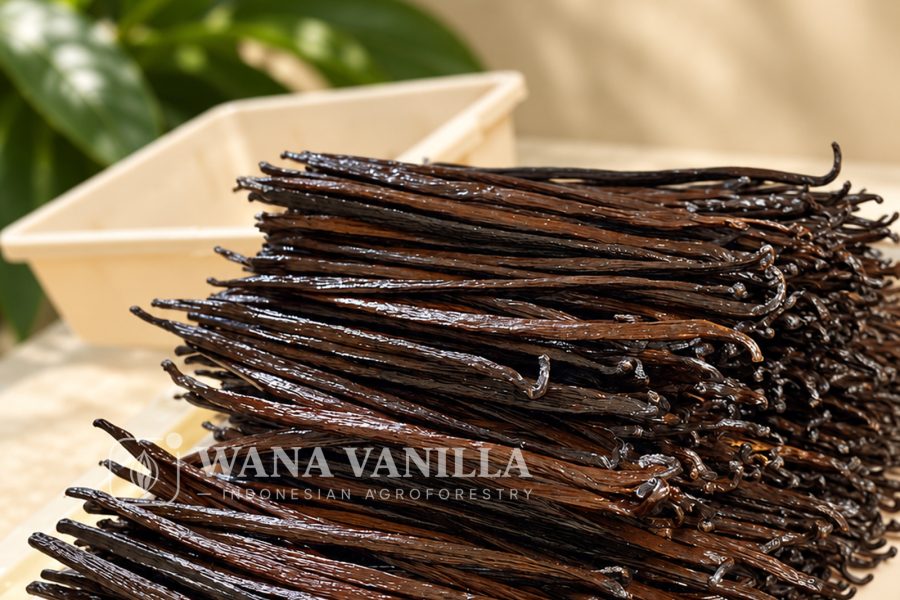
For Planifolia and Tahitensis whole beans, moisture between 25% and 35% supports pliability and visual appeal. Buyers should request moisture as part of the specification, not as an afterthought. A grade A or A+ bean with correct moisture will feel oily and flexible, not dry or stiff.
Extraction Grade Beans
Extraction grade beans are typically lower in visual quality but still need controlled moisture. Excessively wet beans dilute extraction efficiency and increase the risk of microbial contamination. Excessively dry beans may have lost volatile compounds. Buyers should ask the supplier for the moisture range of the specific extraction lot rather than assuming a universal figure.
Ground Vanilla Powder
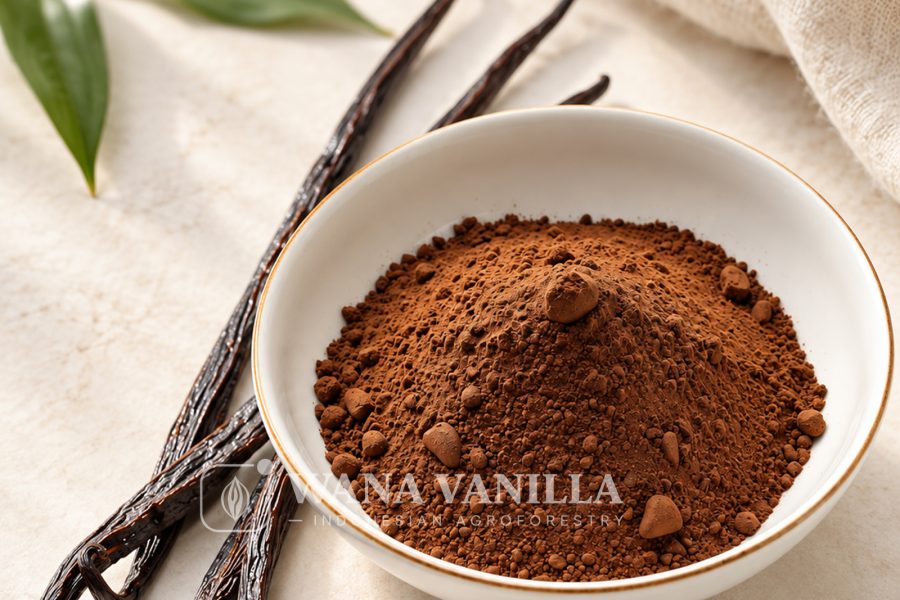
Vanilla powder is more sensitive to moisture than whole beans. A sample certificate of analysis may show a measured moisture value, such as 10.89%, but this should not be treated as a fixed specification for every batch. Buyers should request a current COA per lot and store powder in sealed, dry conditions.
Vanilla Concentrate
Natural vanilla concentrate is a liquid product with different stability parameters. A typical specification may include pH 4.5-5.0 and density around 1.08 kg/L. Moisture is not the primary concern, but pH and density should be confirmed for formulation work.
Practical Checks for Importers and Manufacturers
Before confirming a purchase, consider these practical steps:
- Request the moisture range for the specific lot, not a generic product sheet.
- Ask how beans were conditioned and how long they rested before packing.
- Check packaging: vacuum-packed or food-grade sealed bags reduce moisture fluctuation during air freight.
- Inspect a sample: beans should be pliable, slightly oily and aromatic without visible mould or white spots.
- For powder and concentrate, request a recent COA with moisture, pH and density where relevant.
Air freight is commonly used for international vanilla deliveries. While faster than sea freight, air transport can expose goods to temperature and pressure changes. Proper packaging and correct moisture at dispatch reduce the risk of condensation and spoilage.
Why Conditioning Quality Varies by Supplier
Vanilla trading companies source from multiple curing operations. This means conditioning quality can vary between lots, even from the same supplier. A reliable trading partner should be able to explain the origin, curing method and moisture status of each lot without overstating certifications or farm ownership.
Buyers should be cautious of suppliers who claim uniform results across every batch or who cannot provide lot-specific moisture data. Honest variation is normal in agricultural products; what matters is transparency and control.
Selecting a Vanilla Partner for Consistent Conditioning
When evaluating a vanilla supplier, look for clear product specifications, realistic supply capacities and willingness to support trial orders. A supplier offering whole beans from 1 kg and flexible Incoterms such as EXW, FCA and DAP gives buyers room to test quality before committing to larger volumes.
If you are sourcing Planifolia, Tahitensis, extraction grade beans, vanilla powder or natural concentrate, contact PT Wana Vanilla Indonesia to discuss lot-specific moisture, conditioning and delivery options for your production needs.