How B2B Buyers Evaluate Whole Vanilla Bean Grades and Bean Length
Whole vanilla bean grades and length are core purchasing criteria for importers and food manufacturers. This guide explains how to evaluate Grade A+, Grade A, and extraction grade beans, and why length alone is not enough.
Whole vanilla beans are not a single commodity. For importers, flavour manufacturers, bakeries, and gelato producers, the difference between a workable supply contract and a costly rejection often comes down to how bean grade and bean length are specified, measured, and verified.
This guide explains the practical criteria B2B buyers use when evaluating whole vanilla bean grades and bean length. It focuses on Gourmet Vanilla Planifolia and Gourmet Vanilla Tahitensis, with reference to extraction grade material where relevant.
What Whole Vanilla Bean Grades Mean in B2B Trade
In international trade, whole vanilla beans are commonly sorted into grades based on length, appearance, moisture, and vanillin content. The two most relevant grades for food manufacturing and premium applications are Grade A+ and Grade A.
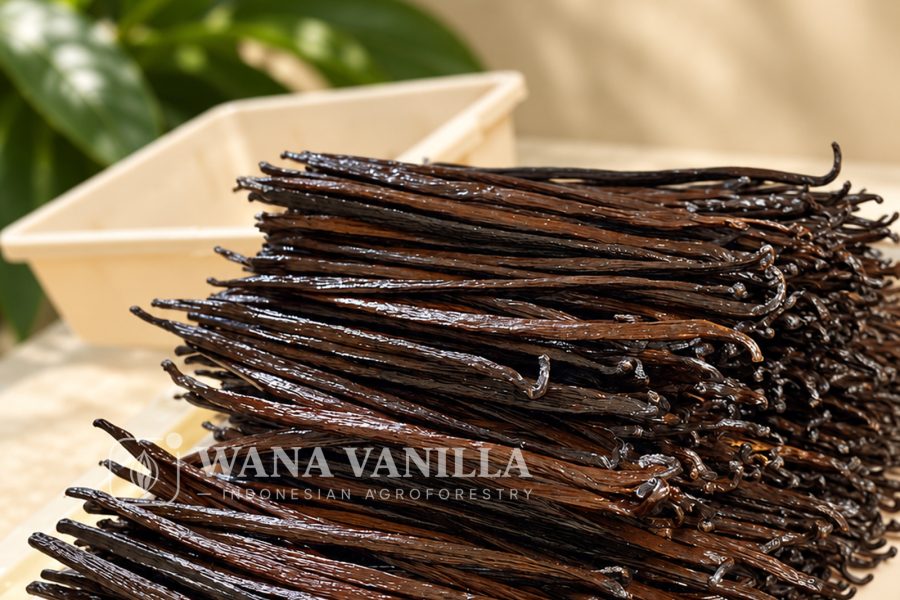
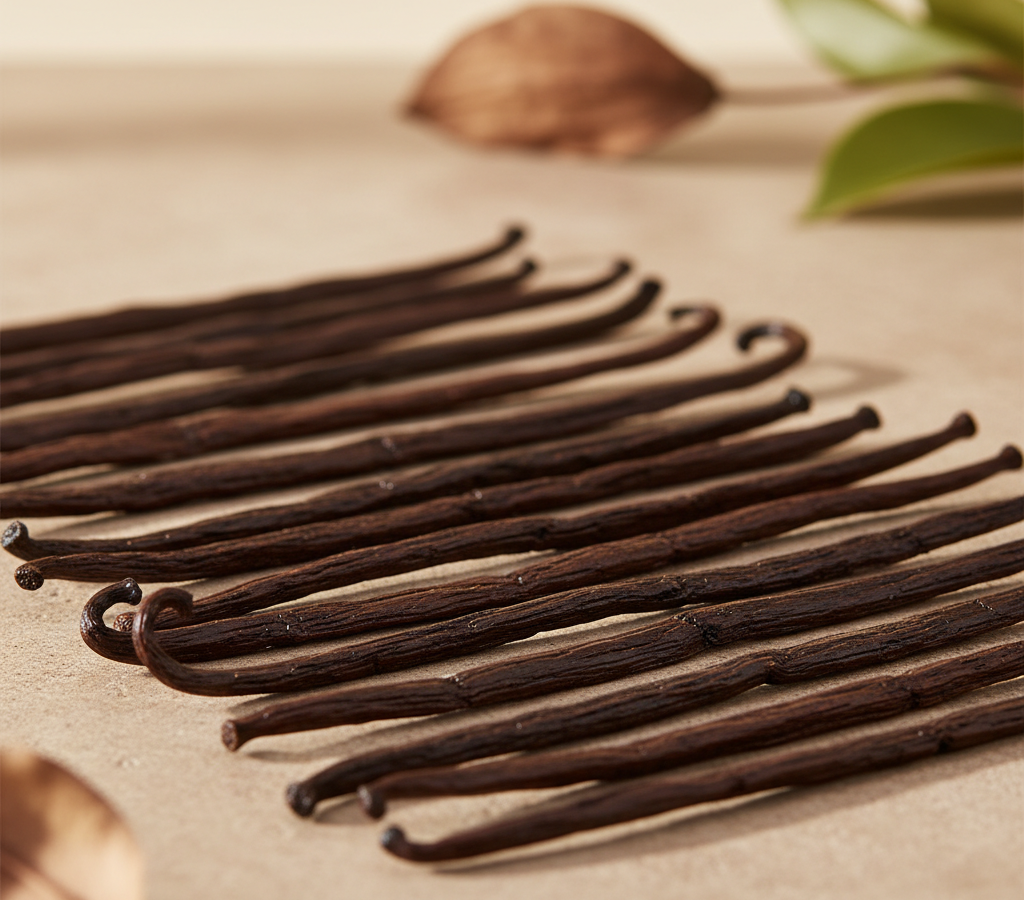
- Grade A+: beans of 18 cm or longer, with high visual quality and suitable moisture for gourmet use.
- Grade A: beans of 14 to 17.9 cm, still suitable for premium applications but shorter than Grade A+.
Both grades should have a moisture content of 25 to 35 percent and a vanillin content of at least 1.5 percent. These specifications matter because moisture affects yield, texture, and shelf stability, while vanillin content influences flavour intensity.
Why Bean Length Is a Practical Sorting Criterion
Bean length is one of the easiest physical parameters to check at receiving, but it is not a direct measure of flavour quality. Buyers use length as a proxy for visual grade and as a way to standardise portioning in production.
Longer beans are often preferred for visible applications such as pastry decoration, retail packs, or high-end gelato. Shorter beans may be perfectly acceptable for extraction, grinding, or paste production, where visual length is less important.
When evaluating length, buyers should confirm how the supplier measures it. A bean that is 18 cm when straightened may be shorter when naturally curved. Clear measurement methods reduce disputes at inspection.
Moisture and Vanillin: The Hidden Part of the Grade
Length and visual grade are easy to see. Moisture and vanillin are not. A bean can look long and dark but still fail a specification if it is overdried or low in vanillin.
For Grade A+ and Grade A Planifolia and Tahitensis beans, a moisture range of 25 to 35 percent is typical for gourmet material. Beans below this range may be brittle and difficult to split or scrape. Beans above this range may be prone to mould during transport and storage.
Vanillin content of at least 1.5 percent is a useful minimum for gourmet grades. Buyers who need consistent flavour intensity should request a certificate of analysis and, where possible, reserve the right to send samples for independent testing.
Planifolia vs Tahitensis: Same Length Grades, Different Profiles
Both Gourmet Vanilla Planifolia and Gourmet Vanilla Tahitensis can be supplied in the same length grades: Grade A+ at 18 cm or longer, and Grade A at 14 to 17.9 cm. However, the two species have different flavour profiles and different supply realities.
Planifolia is the dominant commercial vanilla, with a classic, deep, creamy vanillin-forward profile. Tahitensis is more floral, with anisic and fruity notes, and is produced in much smaller volumes. A buyer should not assume that a Tahitensis Grade A+ bean will perform like a Planifolia Grade A+ bean in the same recipe.
Extraction Grade Beans: A Different Buying Logic
Extraction grade vanilla beans are purchased for processing into extract, paste, or concentrate. In this category, length and visual appearance are less important than total flavour potential and cost efficiency.
Extraction grade material may include Planifolia, Tahitensis, or a mix. Buyers should not assume a single uniform moisture or vanillin specification. Instead, they should request the actual specification for the lot being offered and evaluate it against their extraction yield targets.
Practical Checklist for B2B Buyers
- Confirm the species: Planifolia, Tahitensis, or a specified mix.
- Confirm the grade and length range: Grade A+ (18 cm+) or Grade A (14 to 17.9 cm).
- Request moisture and vanillin specifications for the specific lot.
- Ask how length is measured and whether the measurement method is documented.
- Check the supplier’s stated supply capacity against your order size.
- Start with a trial order where possible, especially for a new supplier relationship.
Working with a Vanilla Trading Company
PT Wana Vanilla Indonesia is an Indonesian vanilla trading company, not a farm or factory. It offers Gourmet Vanilla Planifolia whole beans with a supply capacity of 3,000 kg per month, Gourmet Vanilla Tahitensis whole beans at 100 kg per month, and extraction grade vanilla beans at 5,000 kg per month.
Trial orders for whole beans start from 1 kg, which allows buyers to evaluate grade, length, moisture, and aroma before committing to larger volumes. Incoterms offered include EXW, FCA, and DAP, with international delivery generally arranged by air.
For B2B buyers evaluating whole vanilla bean grades and length, a small trial order is often the fastest way to verify that a supplier’s written specification matches the physical product. To discuss specifications or request a sample, contact PT Wana Vanilla Indonesia.